A leak does not mean you need a new roof. Sometimes it means a flashing detail failed and a two hour visit solves it for another decade.
It also sometimes means the roof is finished and every repair from here is money you will spend again. Telling those apart is most of the job, and it is worth understanding before somebody quotes you either one.
Where the leak is coming from
First, a leak almost never enters where the stain appears. Water runs along the underside of the deck, follows a rafter, and drops onto the ceiling several feet from the actual hole.
That is why chasing the stain is how a roof gets patched three times and still leaks. The diagnosis starts in the attic on a dry day, looking for daylight, dark staining on the sheathing and rusted nail points.
If somebody quotes you a roof repair without going into the attic, they are guessing at where the water came in.
Signs a repair still makes sense
- The shingles are still flexible. If you can lift an edge without it cracking, the roof has life left.
- The problem is isolated to one area, usually a chimney, a valley, a vent boot or a sidewall.
- The roof is well under its rated age.
- The deck underneath is sound where the leak is.
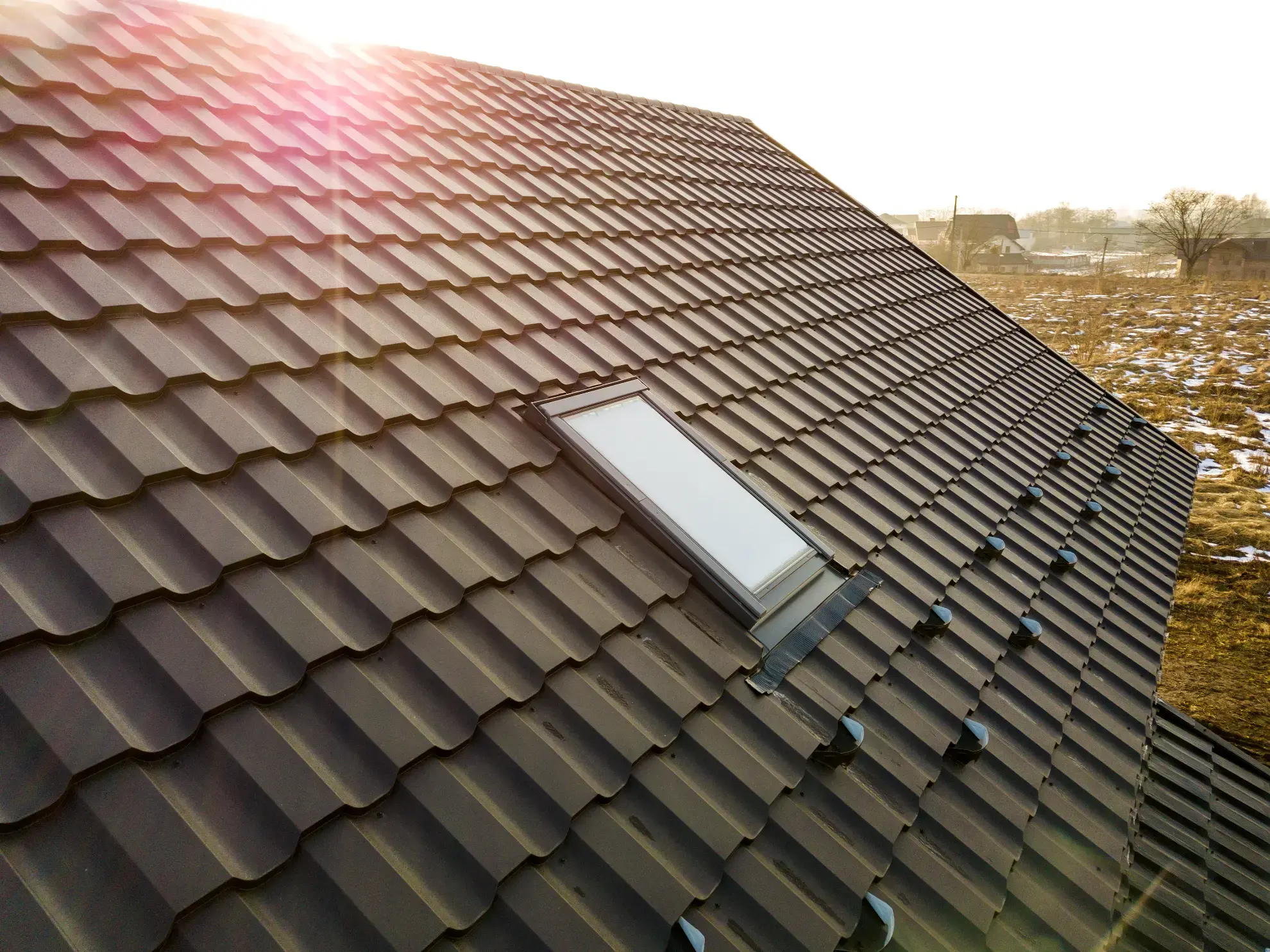
The most common repair we do is flashing. Chimney flashing that was tarred instead of stepped. A dormer with no kick out at the bottom. A cracked boot around a plumbing vent. Those are small material costs and short visits, and they buy real time.
Signs it has stopped making sense
- Shingles are brittle and crack when you lift them.
- Granules are washing off and collecting at the eave or in the gutters. That is the surface wearing out.
- Three or more separate areas on the same slope have already been patched.
- The deck is soft in more than one spot.
- You can see daylight through the boards in the attic in several places.
The multiple patches one is the clearest signal. If three different repairs have happened on the same slope, the fourth is not solving anything. It is buying a season at a time on a roof that has decided.
The math nobody does
Here is the calculation worth running. Take the cost of the repair. Take an honest guess at how long it buys you. Compare that to the cost of replacement divided by the years a new roof gives you.
A repair that buys two winters on a roof with two winters left is a fine decision. A repair that buys two winters on a roof you will replace next year is money you spent twice.
This is a conversation a contractor should be having with you honestly, even though replacement is the bigger sale. If nobody has laid it out this way, ask them to.
What a real assessment includes
Somebody on the roof, not looking from the driveway. Somebody in the attic. A look at the deck condition, the flashing points and the ventilation.
And then a written answer with the reasoning attached, not just a number. You should be able to read the estimate and understand why the recommendation is what it is.
When we look at a roof and think it has two good winters left, we say so. That costs us the job this year and it is still the right answer.
The New England complication
Roofs here work harder than roofs in a mild climate, and that shortens the window where repair is the right call.
Snow sits on the surface for weeks rather than days. Meltwater refreezes at the eaves and backs up under the shingles. Every fastener moves through repeated freeze thaw cycles across a long winter. A roof gets more wear in one year here than in three somewhere temperate.
Practically, that means a roof at the edge of repairable is closer to the edge than it looks. A marginal roof going into a hard winter often comes out the other side as a replacement. That is true whether you are looking at roofing in Keene or roofing in Vermont, though Vermont winters push it harder.
If you are getting bids
Ask each one whether they went in the attic. Ask what they found on the deck. Ask what happens to the price if the sheathing turns out to be soft.
An estimate that includes a line for deck repair is not padding. It is somebody who has opened a roof before and knows what is under old shingles. An estimate that pretends the deck will be fine is one that changes on day two.
One last thing
If water is coming into the house right now, that is a separate question from repair versus replace. Get it covered first, then decide the long term answer with a dry roof and a clear head.
Emergency tarping is cheap compared to what a week of water does to insulation and framing. The decision about the whole roof can wait a few days. Stopping the water cannot.